Pro Tips for Troubleshooting and Fixing Low Water Pressure in Your Home
Need a Reliable Plumber?
Call Us NowYou step into the shower after a long day, turn the handle, and instead of a robust, relaxing stream, you are greeted by a weak, sputtering trickle. Few household issues are as immediately frustrating as low water pressure. Whether it takes twice as long to rinse dishes or your washing machine seems to take hours to fill, a drop in water pressure disrupts your daily routine and signals an underlying issue within your plumbing system.
However, low water pressure is rarely a mystery. It is a highly solvable mechanical issue that stems from a specific bottleneck in your water supply. Understanding how to track down this bottleneck can save you time, prevent further damage to your home, and help you determine exactly when professional intervention is required.
This comprehensive guide provides actionable tips and insider knowledge for property owners dealing with flow issues. From quick DIY checks to understanding the mechanics of your home's water delivery, these professional tips will help you restore your plumbing system to peak performance.
Short Answer: Why Is Your Water Pressure Dropping?
If you are experiencing low water pressure, the decisive answer depends on whether the issue is localized or house-wide. If only one fixture is affected, the problem is almost certainly a clogged aerator or a failing cartridge inside that specific faucet. You can fix this immediately by unscrewing the aerator and cleaning out the mineral debris.
If the low pressure affects your entire home, the root cause is systemic. The most common culprits are a partially closed main shut-off valve, a failing Pressure Reducing Valve (PRV), a hidden water leak draining pressure from the system, or severe mineral buildup in aging pipes. Do not ignore systemic low pressure. If adjusting your main valve does not immediately restore flow, you must contact a licensed plumber to inspect your PRV and test for hidden leaks before the issue escalates into costly water damage.
Is the Issue Localized or Systemic?
Before you begin any troubleshooting, you must isolate the scope of the problem. This initial diagnostic step dictates your entire approach.
Walk through your home and test every cold and hot water fixture. Turn on the kitchen sink, bathroom faucets, showers, and flush the toilets. Pay close attention to how the water flows at each location.
If only the kitchen sink has low pressure, your home's main water supply is perfectly fine. The issue is isolated to that specific fixture or the localized supply lines beneath that sink. Conversely, if every fixture in the house suffers from weak flow, you are dealing with a systemic issue located at or near the main water entry point of your home.
Similarly, test the temperature. If the cold water pressure is strong but the hot water pressure is weak across the house, the bottleneck is located at or inside your water heater.
7 Pro Tips for Troubleshooting Low Water Pressure
When you know exactly what to look for, diagnosing plumbing issues becomes a straightforward process of elimination. Here are the most effective troubleshooting tips you can perform safely.
1. Inspect and Clean Fixture Aerators
Most modern faucets have an aerator at the tip of the spout. This small screen mixes air into the water stream to conserve water and prevent splashing. Over time, calcium, magnesium, and sediment get trapped in this screen, severely restricting flow.
Unscrew the aerator by hand (or use a rag and pliers if it is stuck). Tap it gently to remove loose sediment, then soak the components in white vinegar for 15 to 30 minutes. Scrub it with an old toothbrush, rinse it, and reinstall. This simple maintenance task cures the vast majority of localized pressure complaints.
2. Verify the Main Shut-Off Valve is Fully Open
It sounds obvious, but a partially closed main valve is a remarkably common cause of systemic low pressure. This often happens after routine plumbing work or if a homeowner bumped the valve while moving items in the garage or utility closet.
Locate your main water shut-off valve. If you have a ball valve (a straight handle), ensure the handle is completely parallel to the pipe. If you have a gate valve (a round, wheel-like handle), turn it counterclockwise until it stops completely. Even a slightly closed valve can drastically reduce water volume.
3. Check the Water Meter for Hidden Leaks
A hidden leak forces your plumbing system to constantly push water out of a breached pipe, leaving less pressure available for your fixtures. You can definitively check for hidden leaks using your home's water meter.
Turn off every water-using fixture and appliance in your home (including ice makers and washing machines). Locate your water meter, typically found in a concrete box near the street or sidewalk. Look at the leak indicator dial (often a small red or silver triangle, gear, or star). If the indicator is spinning while all water is shut off, you have an active leak.
4. Test the Pressure Reducing Valve (PRV)
Many homes in Kirkland, WA, are equipped with a Pressure Reducing Valve. Municipal water often enters the property line at dangerously high pressures (sometimes exceeding 100 PSI). The PRV is a bell-shaped brass device located on your main water line that reduces this pressure to a safe 50-70 PSI for your home.
PRVs contain internal springs and diaphragms that wear out over time. When a PRV fails, it can either fail "open" (causing dangerously high pressure and blown pipes) or fail "closed" (restricting flow to a trickle). If your systemic pressure drops suddenly, a failed PRV is the most likely suspect.
5. Investigate the Water Heater Valves
If your low pressure is strictly limited to hot water, focus entirely on the water heater. Check the cold water inlet valve on top of the water heater tank to ensure it is fully open.
Additionally, traditional tank-style water heaters accumulate sediment at the bottom over time. If the tank is not flushed regularly, this sediment can block the hot water outlet, severely restricting the flow of hot water to your home.
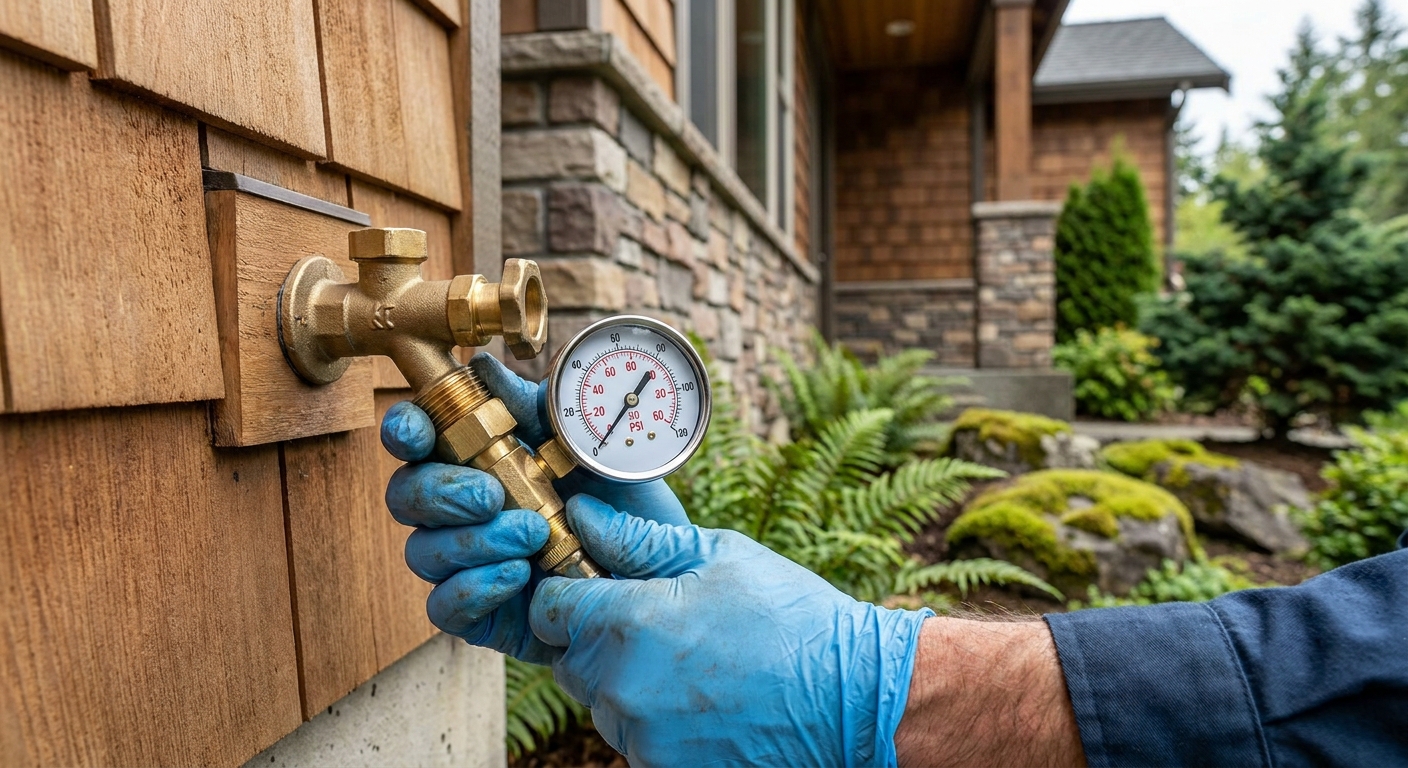
6. Use a Water Pressure Test Gauge
Take the guesswork out of your diagnostics by purchasing a simple, inexpensive water pressure test gauge from a local hardware store.
Thread the gauge onto an outdoor hose bib or your washing machine connection. Turn the water on fully and read the dial. A healthy residential plumbing system should read between 50 and 70 PSI. If your gauge reads below 40 PSI, your system is underperforming. If it reads above 80 PSI, your pressure is actually too high, which can damage appliances and void warranties.
7. Consider the Age of Your Pipes
Older homes in the Kirkland area were often built with galvanized steel plumbing. Over decades, galvanized pipes corrode and rust from the inside out. This internal corrosion creates severe bottlenecks, restricting the internal diameter of the pipe until water can barely pass through.
If your home was built before the 1980s and has not been repiped, deteriorating galvanized lines are a highly probable cause of chronic, gradually worsening low pressure.
Operational Tradeoffs: DIY Troubleshooting vs. Professional Diagnostics
When dealing with water pressure issues, property owners must weigh the operational tradeoffs between DIY fixes and hiring a professional.
The DIY Approach: Cleaning aerators, checking the water meter, and ensuring valves are open are low-risk, high-reward DIY tasks. They cost nothing but a few minutes of your time and require no specialized tools. Using a pressure gauge is also a smart way to monitor your system's baseline health.
The Professional Intervention: However, the tradeoff shifts dramatically when dealing with PRV adjustments, hidden leaks, or pipe replacement. Attempting to adjust a PRV yourself without proper calibration tools can result in over-pressurizing your system, leading to burst washing machine hoses, ruptured water heater tanks, and catastrophic flooding.
At Rooter-Pal Plumbing, LLC, we frequently receive calls from homeowners who attempted to fix a complex pressure issue only to cause severe secondary damage. Paying a diagnostic fee for a licensed professional ensures the root cause is identified accurately and resolved safely. A professional plumber has the acoustic leak detection equipment, commercial-grade pressure testing tools, and local code knowledge necessary to protect your property.
Preventative Maintenance: Keeping Your Pressure Consistent
The best way to handle low water pressure is to prevent it from happening in the first place. Implementing a routine maintenance schedule protects your plumbing infrastructure and ensures consistent, reliable flow year-round.
Annual Water Heater Flushing: Drain and flush your water heater tank once a year to remove sediment buildup. This protects your hot water pressure and extends the life of the heating elements. Routine Aerator Cleaning: Make it a habit to unscrew and soak your faucet aerators and showerheads in vinegar every six months to prevent mineral scaling. Exercise Your Valves: Once a year, gently turn your main water shut-off valve and individual fixture supply valves off and back on. This prevents the internal mechanisms from seizing up due to hard water deposits. Monitor Your PSI: Attach a pressure gauge to your hose bib twice a year to verify your PRV is still regulating pressure correctly. Catching a failing PRV early prevents significant stress on your plumbing system.
Cost-Saving Strategies for Optimal Plumbing Efficiency
Maintaining proper water pressure isn't just about comfort; it is directly tied to the financial efficiency of your home.
Upgrade to WaterSense Fixtures: If your pressure is technically fine (around 60 PSI) but your showers feel weak, do not increase your home's overall pressure. Instead, upgrade to high-efficiency, air-injecting showerheads. These fixtures are engineered to provide the sensation of high pressure while using significantly less water, lowering your monthly utility bills. Address Leaks Immediately: A toilet that runs constantly or a dripping faucet might seem minor, but these leaks drain systemic pressure and waste thousands of gallons of water annually. Fixing them promptly saves money and restores flow. Protect Your Appliances:* If your PRV fails and allows municipal pressure to surge into your home, it will blow out the internal seals on your dishwasher, washing machine, and refrigerator ice maker. Replacing a PRV is vastly more cost-effective than replacing flooded, ruined appliances.
Our team at Rooter-Pal Plumbing, LLC has found that proactive maintenance always costs less than reactive emergency repairs. Investing in routine check-ups keeps your system operating at peak efficiency.
When to Call the Professionals
While localized issues like a clogged showerhead are easy weekend projects, systemic pressure drops require expert attention. If you have checked your main valve, verified you don't have a localized aerator clog, and your entire home is still struggling with weak water flow, it is time to bring in the experts.
When you contact Rooter-Pal Plumbing, LLC, our licensed technicians arrive with the specialized diagnostic equipment needed to pinpoint the exact cause of your pressure loss. Whether you need a new Pressure Reducing Valve calibrated to Kirkland, WA municipal standards, expert leak detection, or a comprehensive assessment of aging pipes, we provide clear, decisive solutions.
Don't let low water pressure disrupt your home's comfort or threaten your plumbing infrastructure. Call Rooter-Pal Plumbing, LLC today to schedule a professional diagnostic and get your water flowing perfectly again.