Grease, Peels, and Pasta: The Holiday Foods That Clog Kitchen Drains
Need a Reliable Plumber?
Call Us NowHoliday cooking is enjoyable until the sink starts to drain slowly. In Seattle and the Eastside, slow drains are a top reason for plumbing calls during the holidays. With the kitchen in constant use and the garbage disposal working overtime, a single mistake can cause a backup.
A garbage disposal is not a trash can. Manufacturers design it for small, soft scraps that slip through during regular rinsing. The disposal cannot handle food waste, grease, or heavy starches. When those go down the drain, they stick, swell, and collect. The result is slow flow, gurgling, and sometimes a complete clog at the worst time.
This guide covers the most common holiday drain mistakes and offers a simple plan to prevent them. You'll also find early warning signs and steps to take if your kitchen sink starts having problems.
The quick “green light” rule for a garbage disposal
Use this as a simple filter during the holiday week.
Green light scraps
- Small, soft pieces of food that are not fibrous
- Tiny bits that rinse off a plate after scraping
- Soft fruit pieces in small amounts
Basic use rules
- Run cold water before turning the disposal on
- Keep cold water running while it grinds.
- Let the water run for 20 to 30 seconds after the disposal sounds clear.
- Feed scraps slowly, in small amounts.
- Stop early if the disposal sounds strained or the sink starts draining slowly.
Cold water keeps fats solid, so they are less likely to stick to the pipes. It also helps push small scraps through the trap and into the main drain line.
Mistake #1: Pouring grease, fat, or pan drippings down the drain
Pouring grease down the drain is the fastest path to a holiday clog.
Grease and fat are liquid when warm, but when they cool, they can stick to the inside of pipes. They also catch crumbs and food bits as they pass by. Over time, this buildup reduces the pipe opening.
Even a small amount of grease can cause problems. It only takes a little to coat a pipe. Dish soap may break up grease in the sink, but it does not remove it from the drain. When the water cools, the grease can settle again.
A better plan
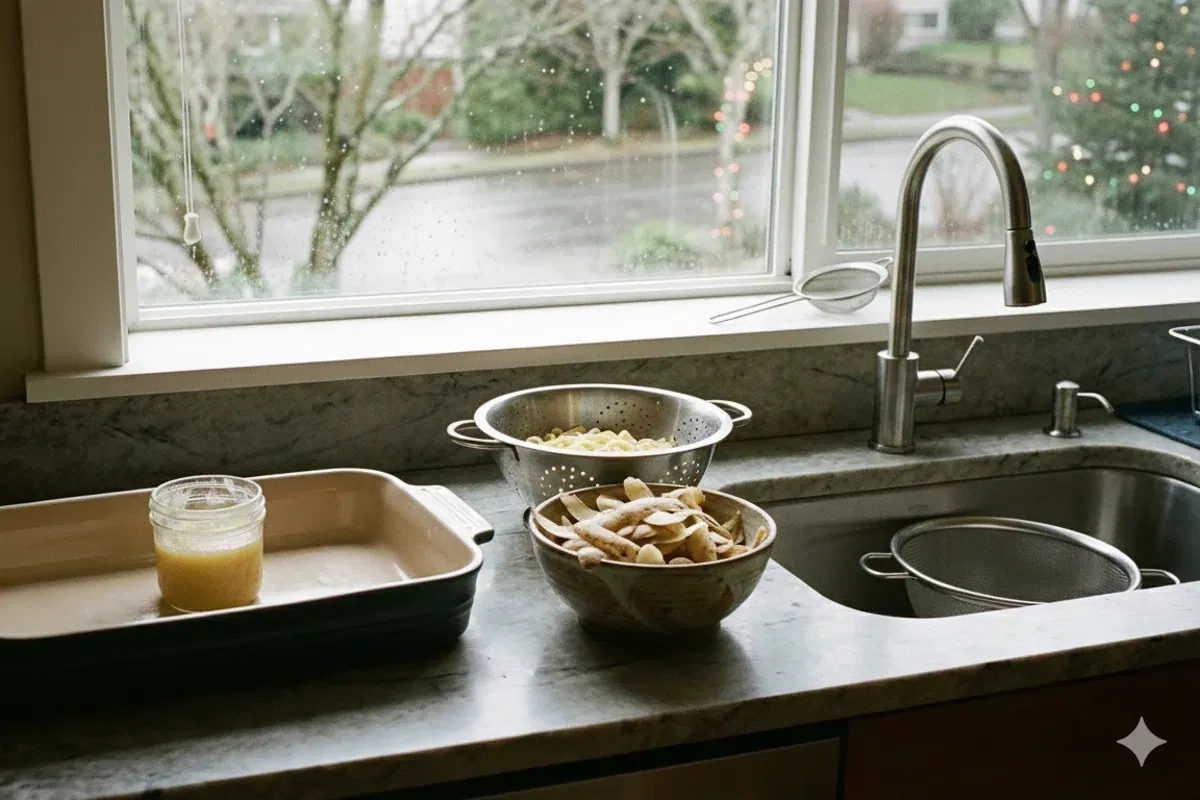
- Pour grease into a heat-safe container.
- Let it cool and put it in the trash.
- Wipe pans with a paper towel before washing.
- Scrape roasting pans and baking sheets before they touch the sink.
This one habit alone lowers the odds of a kitchen backup during the holiday week.
Mistake #2: Treating potato peels like disposable food
Potato peels and starchy leftovers cause problems in different ways.
Potato peels can break into thin strips and collect in the trap or drain line. Leftover mashed potatoes can form a thick paste that sticks to pipes and traps grease and food particles.
High-risk items in the same category
- Potato peels
- Leftover mashed potatoes
- Flour-heavy batter and dough scraps
A better plan
- Put peels in the trash or compost.
- Scrape plates into the trash first.
- Use a sink strainer during prep and cleanup.
If potato prep is part of the meal, set a scrap bowl on the counter and keep the peels out of the sink from the start.
Mistake #3: Grinding fibrous foods that wrap and stall the unit
Fibrous foods shred into strings rather than grinding. These strings can wrap around disposal parts, slowing them down. They can also collect in the trap and form a net that catches other scraps.
Common holiday culprits
- Celery
- Onion skins
- Corn husks
- Asparagus ends
A better plan
- Put fibrous scraps in the trash.
- Keep a countertop scrap bowl during cooking.
- Use the disposal only for small rinse-off bits.
Keeping fibrous scraps out of the disposal keeps the unit running smoothly and reduces the chance of a jam.
Mistake #4: Putting bones, shells, pits, or hard scraps in the disposal
Hard scraps can damage or jam the disposal. Even if some pieces are ground up, they can settle and accumulate in the drain line.
High-risk items
- Turkey bones and rib bones
- Fruit pits
- Nut shells
- Seafood shells
A better plan
- Put hard scraps in the trash.
- Keep the disposal for soft scraps only.
- Use a strainer to catch bits before they enter the drain.
Hard scraps also increase the chance of a clog at the trap under the sink.
Mistake #5: Sending rice, pasta, and bread down the drain
Starch is a significant holiday drain problem.
Rice and pasta soak up water and swell. Bread turns into a sticky mess. Stuffing and thick side dishes can clump together. When starch builds up, it traps grease, forming a heavy blockage.
Typical holiday sources
- Stuffing
- Rolls and bread scraps
- Mac and cheese
- Rice sides
- Pasta leftovers
A better plan
- Scrape starch foods into the trash.
- Use a spatula to clear plates before rinsing.
- Avoid “rinsing leftovers away” in the sink.
If the sink starts draining slowly during the week, starch is often part of the reason.
Mistake #6: Skipping the sink strainer
A sink strainer is an easy and affordable way to prevent clogs. It stops food bits from building up in the drain.
During the holidays, food scraps go down the drain all day long. Even small pieces can add up when the sink is used so much.
What to use
- A basket strainer in the central basin
- A small mesh strainer if the basket openings are large
A simple routine
- Empty the strainer often during meal prep.
- Do a quick wipe of the basin after cooking.
- Keep scraps out of the sink when possible.
Strainers are also helpful if the home has older drain lines, which is common in parts of Seattle, Kirkland, and Bellevue.
Mistake #7: Overloading the disposal during cleanup
Most clogs happen at the end of the meal, when cleanup is rushed. Plates are dumped into the sink, and the disposal runs for long periods with too much food at once.
A better method is short bursts and smaller batches.
The “assembly line” cleanup method
- Scrape plates into the trash.
- Stack plates first, rinse second.
- Rinse lightly, not with heavy scraps.
- Run the disposal in short bursts.
- Keep the cold water running and let it run for 20 to 30 seconds after using the disposal.
The assembly line cleanup method keeps the line moving and reduces the risk of a slow-forming clog over the next few hours.
Early warning signs during the holiday week
Minor warning signs often appear before a full backup. Noticing them early can help you avoid stress and prevent water damage.
Common warning signs
- The kitchen sink drains slowly.
- Gurgling sounds during draining
- Water backs up into the other sink basin.
- The disposal hums but does not spin.
- An odor that shows up when running hot water
If more than one drain in the home is affected, the issue may be in a larger line, not just the kitchen.
A calm, simple plan if the sink starts draining slowly
When the sink slows down, the goal is to prevent a minor clog from turning into a backup.
Step 1: Stop feeding scraps
Keep all food out of the sink and disposal right away. Switch to scraping into the trash.
Step 2: Limit water use
Avoid running the dishwasher until the sink is draining normally. Avoid running the disposal repeatedly.
Step 3: Try safe basics
- A hot water flush can help with light grease, but avoid extreme heat on older plastic drain parts.
- A plunger can help on a double-basin sink when used correctly.
- Block the other basin with a wet rag or a stopper.
- Plunge the slow side with short, firm pushes.
Step 4: Stop if symptoms get worse
Stop if water starts backing up, if it affects another drain, or if the sink will not drain at all.
If you stop when symptoms get worse, you can prevent overflow and keep things under control.
When it’s time to call RooterPal Plumbing
Some clogs clear with basic steps. Some do not. A professional visit makes sense when the signs point to a deeper blockage or a repeat issue.
Call for help when
- The slow drain keeps returning.
- Water backs up into another fixture.
- A disposal jam returns after resetting
- The kitchen sink affects other drains in the home.
- Odors and gurgling continue even after careful cleanup.
What a professional visit looks like
- A quick review of symptoms and recent changes
- A clear-out of the blockage using the proper method for the line
- A check for buildup patterns that cause repeat clogs
- Simple prevention steps based on the home and the drain layout
RooterPal Plumbing helps homeowners in Seattle, Kirkland, Bellevue, and the Eastside. Our main goal is to restore normal flow and help prevent future problems.
Holiday drain habits that lower stress all week
These habits take little time and keep the kitchen running.
- Keep a grease jar on the counter.
- Use a scrap bowl during prep.
- Scrape plates first, rinse second.
- Use a strainer every time during the holiday week.
- Run cold water when using the disposal.
- Plan preventive drain cleaning if the home has a smooth week in the kitchen, as it is less stressful and results in fewer urgent calls or cleanup emergencies.
Keep the kitchen moving throughout the entire holiday season.
Holiday cooking should not end with a clogged sink. Simple habits can keep your drains clear and lower the risk of a backup. If your kitchen sink is slow or your disposal is having problems, RooterPal Plumbing is ready to help in Seattle, Kirkland, Bellevue, and the Eastside. Call or book a service as soon as you notice early signs, and keep your week running smoothly.